

Growth and Resilience in Changing Times: The Strength of Saskatchewan
General Academic Assembly 2025 State of the University Address
By Vince Bruni-BossioThank you for being here and thank you for the work you do every day to advance the mission of the University of Saskatchewan.
I want to begin by acknowledging that we gather on Treaty 6 Territory and the Homeland of the Métis. We pay our respect to the First Nations and Métis ancestors of this place, and we reaffirm our relationship with one another. This acknowledgement is a reminder of the responsibilities we carry — responsibilities grounded in reciprocity, respect, and the ongoing work of relationship‑building with Indigenous peoples and communities. This work continues to shape who we are and who we aspire to be.
My intention today is to speak with clarity, with honesty, and with a sense of shared purpose.
We are meeting at a moment of profound global uncertainty — a moment that demands determination from institutions like ours.
Immense uncertainty around the world is creating pressures on higher education. Global challenges such as climate change, the next pandemic, the energy transition, mass displacement, widening income disparities, food and water insecurity, geopolitical instability, threats to democracy, political polarization, and the unknown effects of artificial intelligence all influence how people see the value of universities.
To add further complexity, these challenges do not exist in isolation but rather are interrelated and interconnected, which accelerates their impact.
In the past, public policy and economic trends often followed a predictable arc. A government policy approach or an economic trend could be expected to have a lifecycle of between three to seven years. Now — because of multiple interrelated global challenges — policies, economic strategies, focus areas, and economic priorities can shift monthly, weekly, and even daily.
In the wake of all this uncertainty, society is demanding universities demonstrate their contribution and value in answering and solving these global challenges. And, to further complicate matters, at the same time as universities are being asked to demonstrate their value, they are in tandem facing a crisis of trust with concerns about elitism, free speech, evidence‑based decision‑making, under-funding, and political pressure.
So, just when global challenges are most complex, when universities can help the most, higher education is being reappraised, and, sadly, is perceived in some places as not measuring up to the expectations and needs of society.
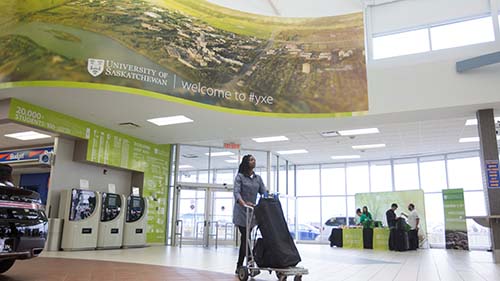
A key issue that Canadian universities are facing is the reality that priorities are shifting as federal and provincial governments mobilize to ensure stability in these unpredictable times. Examples of topical issues governments are focused on in Canada include:
- Limiting immigration, resulting in recent federal policies that limit the number of international students universities in Canada can recruit.
- Addressing homelessness, resulting in concern at all levels for more affordable housing
- Supporting public health, including an acute focus on our ability to respond to future pandemics, and
- Most recently, we have seen a deliberate focus by the federal government on national defense and security in response to recent world events, underscoring the importance of protecting Canada’s sovereignty in an evolving global landscape.
In Canada, the contribution of universities to this changing landscape will come from the work we do best, which is our research, teaching, and innovation. Through this work, I know we will continue to show that we are relevant to Canada’s prosperity and resilience. But each university will need to clearly articulate its strengths and demonstrate how and where it can help.
As a university, we must consider what role USask will have in addressing global, national and provincial challenges. We must consider how we can demonstrate our contribution and value to society in these uncertain times and by doing so thrive.
I believe our success is and has always been derived from our connection with our local context here in Saskatchewan. After all, our university is first and foremost a community of people who serve and work with the people of Saskatchewan.
The province of Saskatchewan is part of our USask community and an advantage to our work.
When I say the province of Saskatchewan, I include all communities across the province, industry, the provincial government, Indigenous peoples, newcomers, and more.
We are fortunate to be in a province with a rich and deep history in many key areas such as:
- Indigenous sovereignty and rights relations,
- agriculture and food production,
- water stewardship,
- energy transition,
- rural health,
- vaccine development, and
- climate resilience.
Saskatchewan’s industries are central to Canada’s economic future.
Our students learn alongside partners who are shaping the next generation of food systems, clean energy, biotechnology, and digital innovation.
They gain hands-on experience in sectors that are transforming rapidly, and they do so in a province where collaboration is the norm; relationships are close; and innovation can move quickly from idea to implementation.
Saskatchewan also has a rich history in visual, performing, and creative arts, and in leading political thought and policy change.
We are also fortunate to live in a province where our alumni and donors are woven into the fabric of Saskatchewan — alumni who lead in every sector of the province and donors whose generosity strengthens our capacity to serve Saskatchewan
Saskatchewan people are also highly supportive of our Huskie student athletes, demonstrated by how Huskie events bring people together and inspire pride across the province.
Overall, our Saskatchewan context gives us a scale, a clarity of purpose, and a proximity to real world challenges combined with a deep sense of community that few universities enjoy.
Because the challenges and opportunities we work on are concentrated in Saskatchewan, our work is not abstract. It is grounded, it is urgent, and it is shaped by the people who experience these realities firsthand.
Our Saskatchewan context gives us a story that resonates globally: a university working in partnership with its province to tackle problems that the world is trying to solve.
And talent is drawn to places where purpose is clear, where research is connected to community, and where the impact of one’s work can be seen and felt.
Overall, our connection to Saskatchewan has provided a foundation that has allowed us to grow our international reputation as a world-class institution. When we travel around the globe, we have a lot to share, and people are extremely excited by what the University of Saskatchewan is doing.
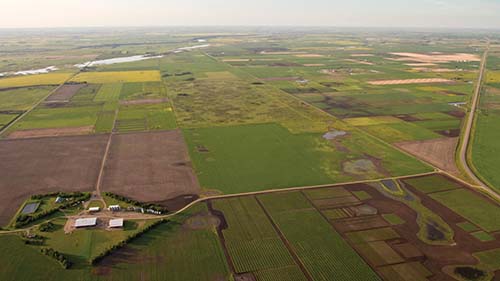
USask and the province of Saskatchewan have, in essence, evolved together to be world leaders.
The University of Saskatchewan was founded in 1907, when the province made the bold decision to establish a full university — not just a college — for a population of only a quarter of a million people.
From the outset, our first colleges in Arts and Science, Agriculture, Engineering, and Law reflected the needs and ambitions of a young province determined to educate its citizens and shape its future.
Early leaders envisioned an institution grounded in public service and built to serve Saskatchewan on a large scale. The founding community of this university created a legacy which continues to inform our commitments to discovery, to public service, and to the people of this province.
Highlights of the immense impact USask has had since being formed include:
- Our community contributing to work recognized with the Nobel Prize — from Gerhard Herzberg’s Nobel Prize in Chemistry in 1971 to USask researchers’ contributions to the Nobel Peace Prize awarded to the Intergovernmental Panel on Climate Change (IPCC) in 2007.
- Our development of the Cobalt60 cancer therapy in the 1950s revolutionized radiation treatment worldwide, saved millions of lives and established Saskatchewan as a global leader in medical innovation.
- Other examples of USask’s impact globally include:
- our building the Canadian Light Source, Canada’s only synchrotron, and establishing the Vaccine and Infectious Disease Organization (VIDO) as a national leader in infectious disease research;
- creating the Sylvia Fedoruk Canadian Centre for Nuclear Innovation, which has strengthened Canada’s capacity in nuclear science, medical isotopes, and advanced imaging; and
- advancing agricultural innovation through the Crop Development Centre, whose crop varieties have had a profound impact on Canada’s food security.
These achievements— and so many more— demonstrate that when USask commits to bold ideas here in Saskatchewan, our impact reaches far beyond our provincial borders.
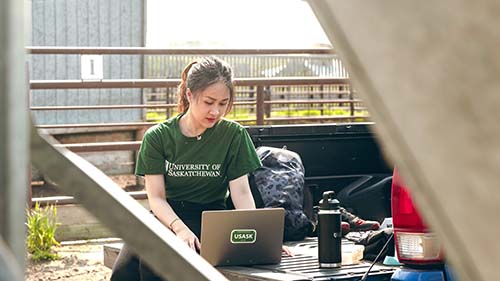
Our history has also brought lessons that have informed how we act and strategize today.
Like many Canadian universities, USask has learned important lessons around exclusion, inequity, and participation in colonial systems. We have learned humility and we have understood the need to evolve.
Perhaps our greatest lesson has been in our work with Indigenous peoples which has taught us that reconciliation requires more than acknowledgement — it requires action, accountability, and shared leadership.
We have also learned that we must confront and address the realities of climate change and our environmental responsibility.
These and other areas reflect how USask’s growth has been shaped by humility, which continues to guide how we respond to the challenges of today.

When we look at our strengths today, we see clearly how our connection with Saskatchewan has positioned us well in a time when many institutions are facing deep uncertainty and high levels of scrutiny. With this in mind, I want to take a few minutes to outline some of our key strengths:
First, our research has real and measurable impact. Across our campuses and communities, our researchers are addressing some of the world’s most pressing challenges. USask’s signature strengths are deeply grounded in Saskatchewan’s people, land, and industries in areas such as:
- innovation in agriculture and agri‑food;
- advancing global food and water security;
- driving vaccine development and infectious disease solutions;
- strengthening One Health approaches that integrate human, animal, and environmental wellbeing; and
- accelerating sustainability and energy transition research.
Our work drives innovation, strengthens industry, and contributes to global knowledge in ways that matter. As an example, we are the only university in Canada hosting four Major Science Initiatives:
- the Vaccine and Infectious Disease Organization,
- the Canadian Light Source synchrotron,
- SuperDARN, the international radar network monitoring Earth’s upper atmosphere,
- and the Global Water Futures Observatories, the world’s largest university led freshwater research program.
We also house many other important research centers and institutes focused on our Saskatchewan strengths such as:
- the Sylvia Fedoruk Canadian Centre for Nuclear Innovation
- the Global Institute for Food Security
- the Global Institute for Water Security
- and the Livestock and Forage Centre of Excellence
These world-class facilities attract global talent and drive discoveries that have resulted in USask researchers being leaders of multiple national and international research projects and collaborations. I remind us all again that these are areas where Saskatchewan’s strengths align directly with global needs.
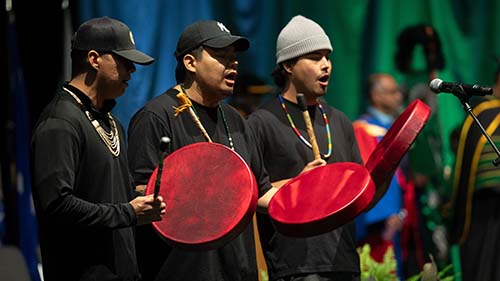
Second, our teaching and learning mission is strong. Our graduates strengthen every community they join. They are adaptable, skilled, and ready to contribute.
Each year, USask graduates roughly 4,500 students. And while our graduates build careers all over the world, nearly 70 per cent choose to stay right here in Saskatchewan after they finish their studies, strengthening the province’s workforce, economy, and future.
We are also working diligently to improve the student experience for all, ensuring every learner has the supports, opportunities, and environment they need to thrive.
Our faculty also continue to innovate in classrooms, labs, studios, and community settings, ensuring our students are prepared for a rapidly changing world.
USask educators have been nationally recognized for excellence, including recipients of the 3M National Teaching Fellowship and the Lieutenant Governor’s Post Secondary Teaching Award — two of the highest honours in Canadian higher education.
Experiential and work‑integrated learning opportunities are expanding across the university, from clinical placements and co-ops to community engaged projects that connect students directly with industry, government, and not-for-profit partners.
Flexible learning options continue to increase access for learners across Saskatchewan, including those in northern and rural communities.
Community based health and education programs are also improving services in rural and northern Saskatchewan, ensuring that learners across the province have access to high-quality training and support; and
Our social, environmental, and cultural impact continues to grow through our programming.
Overall, our students are shaping the workforce in Saskatchewan with their skills, adaptability, and experience by contributing to health care, education, engineering, agriculture, business, public service, and beyond.
Third, we mobilize around the issues that matter most. We do not shy away from complexity. We engage with it — through research, through teaching, and through partnerships that help public and private sectors adapt and grow. Whether it is driving innovation or responding to the realities of climate change and sustainability, our community continues to come together with purpose. A key example is our commitment to Truth and Reconciliation.
I use the idea of a “commitment” because I do not want to give the false impression that we have achieved our goals. In fact, I know we still have a lot of work to do for Truth and Reconciliation, but we are committed to this work.
We are showing our commitment though the ohpahotân | oohpaahotaan strategy, gifted to us by Indigenous elders and leaders, which is the first Indigenous led strategy of its kind in Canada. It challenges us to rethink our structures, our relationships, and our responsibilities, and it guides us toward a future where Indigenous ways of knowing, being, and doing are woven into the fabric of the university.
We are also actively working to support Indigenous economic sovereignty. USask researchers collaborate with Indigenous governments and communities on land stewardship, governance, entrepreneurship, and economic policy in ways that support community driven priorities.
Indigenous scholars at USask are also shaping national conversations on self-determination and governance.
We also strive to be a place where all people are welcome.
We are committed to ensuring that members of the 2SLGBTQQIA+ community, people of colour, people with disabilities and accessibility needs and individuals from diverse ethnic backgrounds feel they are a part of this university.
This commitment is grounded in the Equity, Diversity and Inclusion Framework for Action and strengthened by our Accessibility Plan, which guide our work to remove barriers and build a more inclusive university.
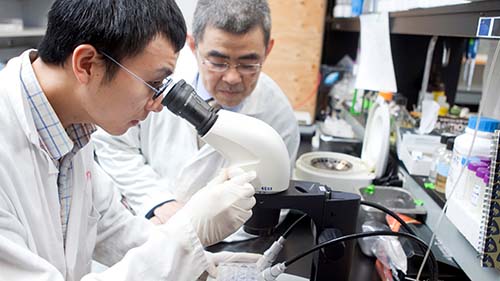
Fourth, we are driving innovation across sectors. USask researchers and students are helping industry adapt through advances in agriculture, food systems, energy, health, and technology.
Our work in food security and sustainable agriculture is shaping national and global policy.
We are a national leader in One Health, bringing together human, animal, and environmental health research to address complex challenges.
Our entrepreneurship and innovation ecosystem — including the Research Junction partnership with the City of Saskatoon and Innovation Enterprise — is helping move ideas into industry and supporting Saskatchewan’s economic diversification.
This ecosystem is further strengthened by initiatives such as the OPUS innovation hub and the Bernie Slogotski and Thedra Hunt Entrepreneurship Centre in Edwards. Together, they help accelerate new ventures and support emerging entrepreneurs across Saskatchewan.
Fifth, we are strengthening culture and community. Through the arts, humanities, and social sciences, USask scholars and creators are shaping public dialogue, enriching cultural life, and helping communities navigate social change.
This work is important because history has shown us that visual, performing, and creative arts are critical to the evolution and, yes, even the survival of any society.
Once again, it is the strong history of the visual, performing, and creative arts of this province which has given us the ability to continue to shape the artistic community of this country and achieve global recognition
As an example, recently, the Greystone Singers made their Carnegie Hall debut in 2024, a milestone that showcased the strength of USask’s choral program on one of the world’s most prestigious stages.
Our longstanding leadership in theatre was also highlighted through the 80th anniversary of the USask Drama Department — one of the oldest in Canada — which received national media attention and celebrated the program’s historic influence on Canadian theatre.
And through the ohpinamake Prize, created by USask Art Galleries and Collections, we continue to elevate Indigenous artists whose work “lifts others,” including recent recipient and USask alum Catherine Blackburn, whose national recognition reflects our commitment to reconciliation and cultural leadership.
USask also received a $5million investment from the Mastercard Foundation to expand programming that supports and uplifts Indigenous youth, strengthening opportunities in mentorship, leadership development, and pathways to postsecondary education.
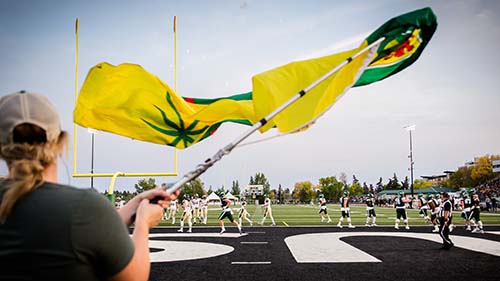
Our Huskies student athletes are also strengthening community — bringing people together across campus and across the province, inspiring young athletes, and showing how sport builds pride, connection, and leadership.
Together, these achievements demonstrate how USask continues to shape the cultural identity of Saskatchewan and contribute to the artistic landscape of Canada.
Sixth, we are resilient in the face of national and global pressures. While many universities are deeply exposed to international student volatility and shifting federal policies — including recent changes from Immigration, Refugees and Citizenship Canada — USask is positioned to navigate uncertainty with confidence. A key source of this strength is our strong relationships with all levels of government, our strong connection to industry and a sustained philanthropic momentum.
The close alignment between the university’s priorities and the Government of Saskatchewan’s Plan for Growth reflects our deep connection to the province’s needs. This is especially evident in health-related disciplines, where our efforts to launch and expand innovative programs align with provincial priorities and are supported through targeted Health Human Resources funding.
We also have strong working relationships with the premier, ministers, and senior officials across government demonstrated by recent international missions. Examples include a 2025 trip to Germany with the premier that resulted in a new partnership with one of the world’s leading veterinary medicine institutions; a 2026 mission to Thailand and the Philippines that expanded student mobility and research collaboration; and a mission to India with the premier and the prime minister that advanced partnerships in agrifood technology, water security, and public health. These are but a few examples of how USask and the province work together to advance Saskatchewan’s presence on the world stage.
And we are also the only province where all higher-education institutions have a multi-year funding agreement with the province.
Our strong industry partnerships with companies such as Cameco, Nutrien, Siemens, BHP, and Federated Co-operatives Limited support research and innovation across nuclear science, sustainable agriculture, energy systems, mining and policy work. These relationships are complemented by deep connections with community organizations, not-for-profits, and Saskatchewan’s arts sector, strengthened further by the new School for the Arts, which brings together artists, scholars, and community partners to support creative collaboration across the province.
The support of donors and alumni around the world was shown through the Be What the World Need campaign, which surpassed its ambitious goal and raised $571 million — the largest fundraising achievement in Saskatchewan’s history. More than 27,000 donors contributed over 100,000 gifts to support more than 2,600 initiatives across our campuses.
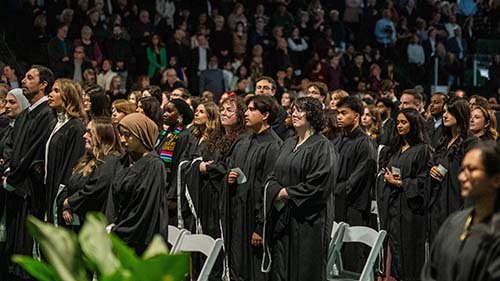
Taken together, these strengths position USask to help solve some of the world’s biggest challenges. They show us clearly that we have a strong foundation upon which we can build to accelerate momentum and achieve impact
As a result of our connection to Saskatchewan — and the work done to elevate our recognition globally — the university’s global profile continues to grow. This is reflected in rising global rankings and in leadership roles within the U15 Group of Canadian Research Universities and Universities Canada.
USask is recognized nationally for its research, its commitment to reconciliation, and its ability to bring partners together to solve complex problems.
But I want to be clear: emphasizing our connection to Saskatchewan does not mean turning away from international ambitions, or from strengthening our global reputation.
On the contrary, USask’s international impact will grow precisely because the university continues to draw on the strengths of its Saskatchewan context.
It is through these strengths of being in Saskatchewan that we will continue to: be world-leading in multiple areas; respond effectively to the rapid change and uncertainty in higher education; and uphold our values and commitments.
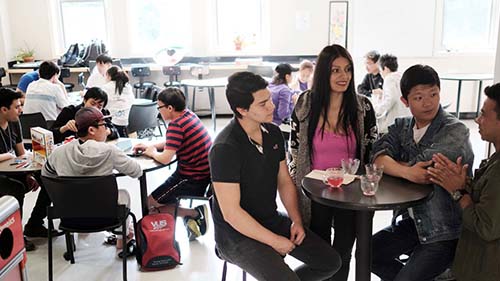
It is also important to note that by focusing on strengths, I am not suggesting that we do not have challenges, weaknesses, or areas for growth — nor am I ignoring the voices of those who feel we can and should do better. I believe beginning with strengths helps define our identity and mission, while still allowing us to address shortcomings with honesty and intention.
Everyone who is part of USask contributes to our success. Every role matters. To move forward effectively as a university, we will need to do so together.
Our ability to contribute meaningfully to society in these uncertain times depends on us having a shared understanding of who we are and who we choose to become.
We must reflect collectively on our current and future strengths, and on the values that guide us.
With this in mind, we have begun the process to develop our new strategic plan, UPlan 2035.
This planning process is designed to provide our community the opportunity to define our collective identity together. Our goal is to ensure UPlan 2035 is informed by the people who work and study here, by the communities we serve, by the Indigenous peoples of this land, by industry partners and donors who support us, by the governments who fund us and partner with us, and by the people of this province who send their families to USask.
Our process will follow three stages:
- In the generation phase, we are seeking to identify broad themes around our strengths and values.
- In the defining phase, we will begin to identify priorities that are measurable, future oriented, and focused on the areas where USask can have the greatest impact.
- In the validate phase, we will return to key groups across campus and beyond to test and refine the priorities.
We launched the generation phase only a few weeks ago, and it is already becoming one of the most extensive consultation efforts in our USask history.
In closing, I reiterate that through our connection with our local Saskatchewan context, we have already shown the world we are a world class institution. Our connection with Saskatchewan has also prepared us to address the global uncertainty and rapid change we are facing. By deepening this connection with our province and the strengths it offers us, we can lead positive change on a global stage.
But we can only do so if we continue to work as a community guided by shared values.
As we adapt to the changes of this uncertain world, we must do so in ways that align with our values.
This means, to make good decisions, we will need to continue to foster truthful dialogue and generate solutions together.
By working together, I truly believe we can forge a strong path forward that positions USask to contribute immense value to the province, to the country, and to the world.
I want to thank you all for your commitment to this university and to its mission.
Thank you for your scholarship, your teaching, your service, and your leadership.
I urge you to take part in the strategic planning process. Your voices, thoughts, and your insights are needed now more than ever to help us contribute in these unique times.
Thank you also for your trust in my leadership. It means so much to me.
Together, we will continue to move forward with transparency, collaboration, and shared purpose.
Together, we are a community of insight and strength. And,
Together, we will write the next chapter of the University of Saskatchewan.